Kenya Safari
by Tom Dahlin
Most of my work has been college and professional sports, but I’ve always wanted to do projects involving travel, nature and people. When an opportunity arose to join a photo safari group in Kenya, I jumped on it. The safari was scheduled for January 2012, a good time to flee Minnesota's winter, plus the NFL season was winding down and the Vikes already had stunk it up.
Over 14 days in Kenya, we visited three game reserves: Samburu, Lake Nakuru, and Masai Mara. Each was quite different and presented new photo opportunities.
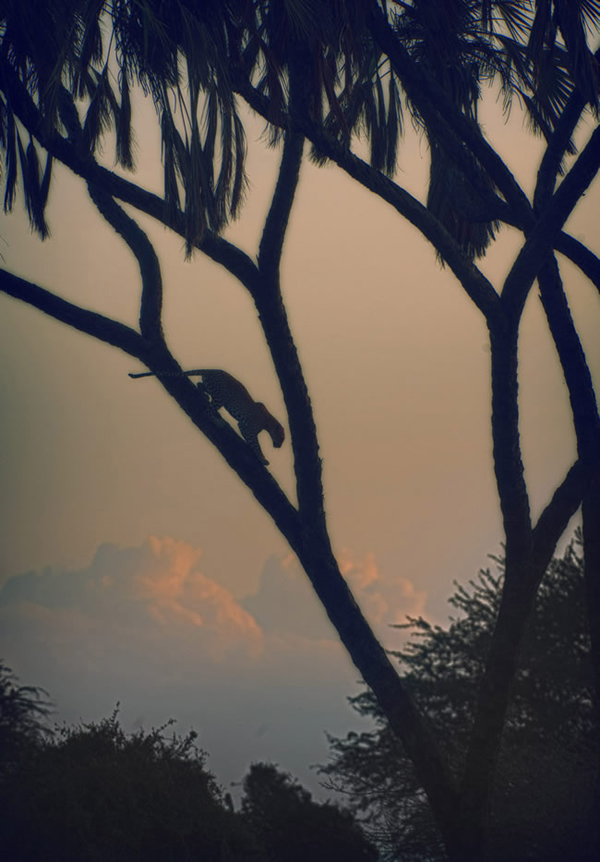
A majestic leopard strolls down a palm tree, silhouetted by the African sunset in the Samburu Preserve.
Boy Scout Camp Was Never Like This
The lodging was listed as ‘tent camps’. To me, this conjured up images from my Boy Scout leader days of cramped canvas tents and sleeping bags. “OK”, I thought, “maybe they have somewhat larger tents and cots”. I totally expected to have to walk to a latrine with flashlight at night and use a communal shower. Boy, what a surprise. To my delight, I found that ‘tent camp’ meant huge vertical walled tents with wood parquet floors, a writing table, dressers, private bathrooms with showers, and double beds with lace canopies. All had hot water and electricity. And the coup de grace .. The camp staff brings you carafes of hot chocolate and coffee with your pre-dawn wakeup knock. Life is good.
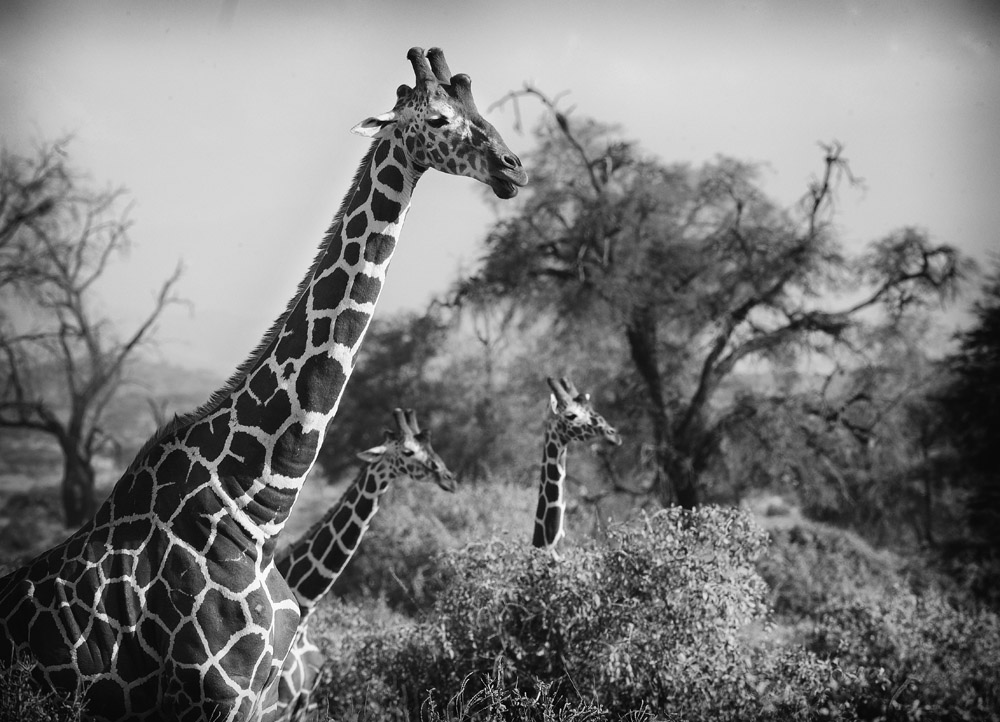
Giraffes in Samburu Reserve.
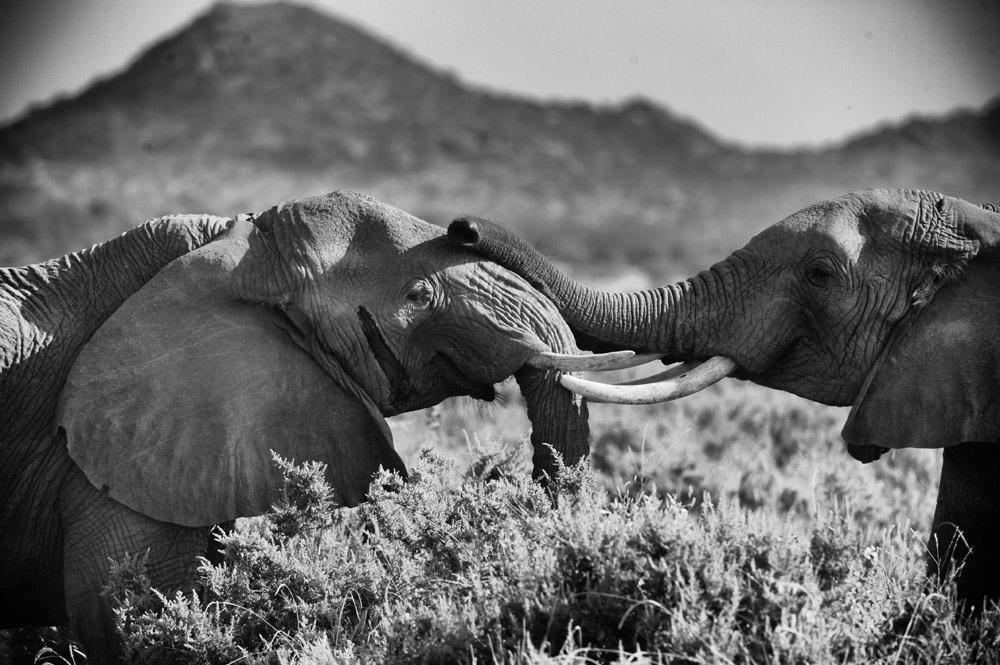
Elephants playing in Samburu Preserve.
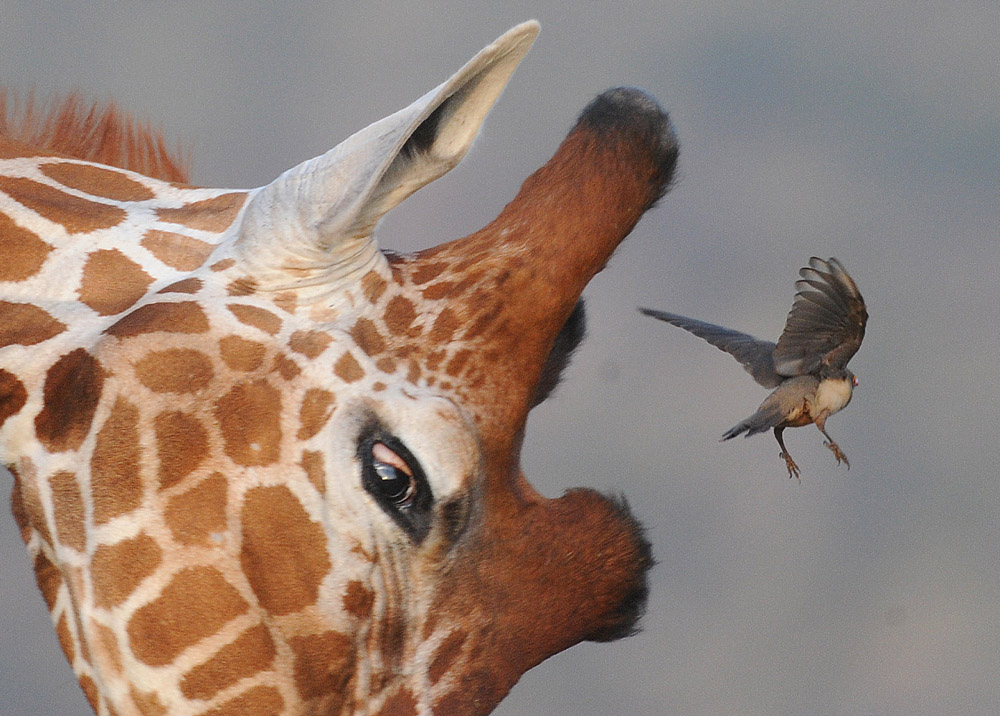
Oxpecker bugging a giraffe for a snack.
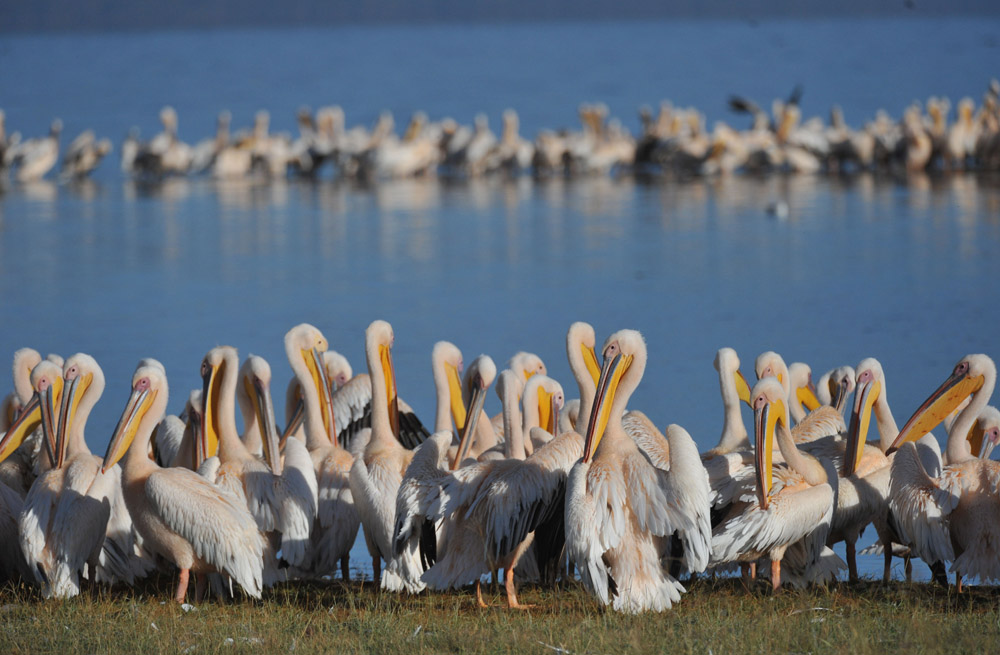
Lake Nakuru pelican convention.
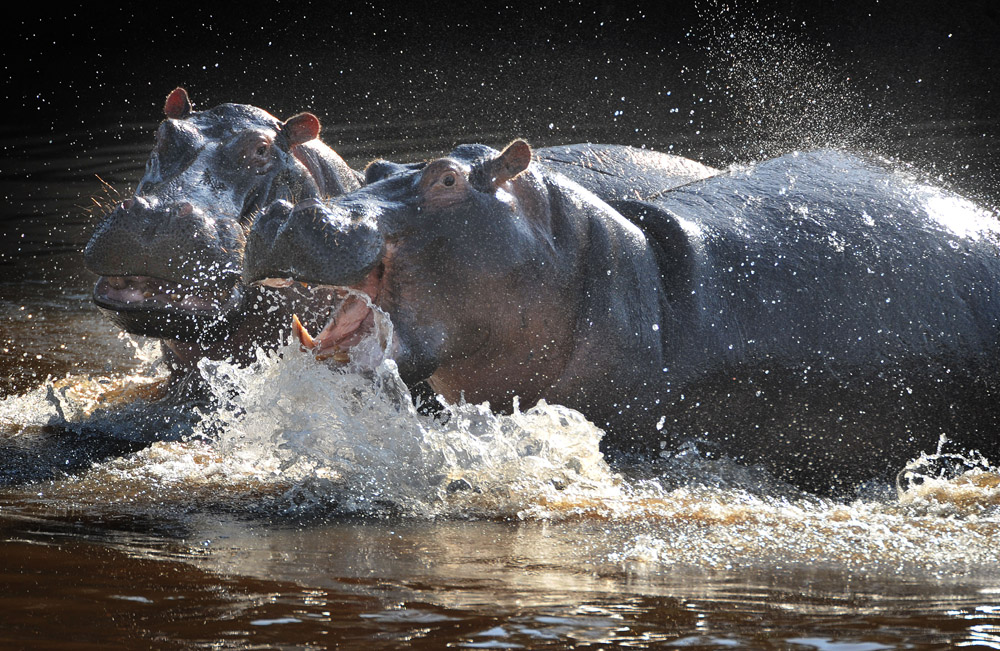
Hippos in the Masai Mara mostly stay submerged in the river, with only their eyes and wiggling ears normally visible to photographers. These two show their ferocity and bare large canines possessed by the herbivores. They can run quite fast for brief periods and are aggressive toward humans who enter their territory on foot. This photo taken from a Land Rover on a river bank about the watering hole of about 50 hippos.
Typical Travel Day
On days where we moved to new camp/reserve, we started in the morning, drove through the day and arrived mid-afternoon. The drives were all several hours long, over varied road conditions ranging from what we in the USA would consider a poor two lane highway, to very poor, rutted two track roads with washouts. These drives were extremely interesting, as once outside of Nairobi, you get to see the Kenyan countryside and small villages up close and personal. The people, colorful painted buildings, hand crafted signs, and old vehicles were fascinating and would make a wonderful photo essay in themselves. I tried to capture as many grab images as I could trough the window of our jostling vehicle.
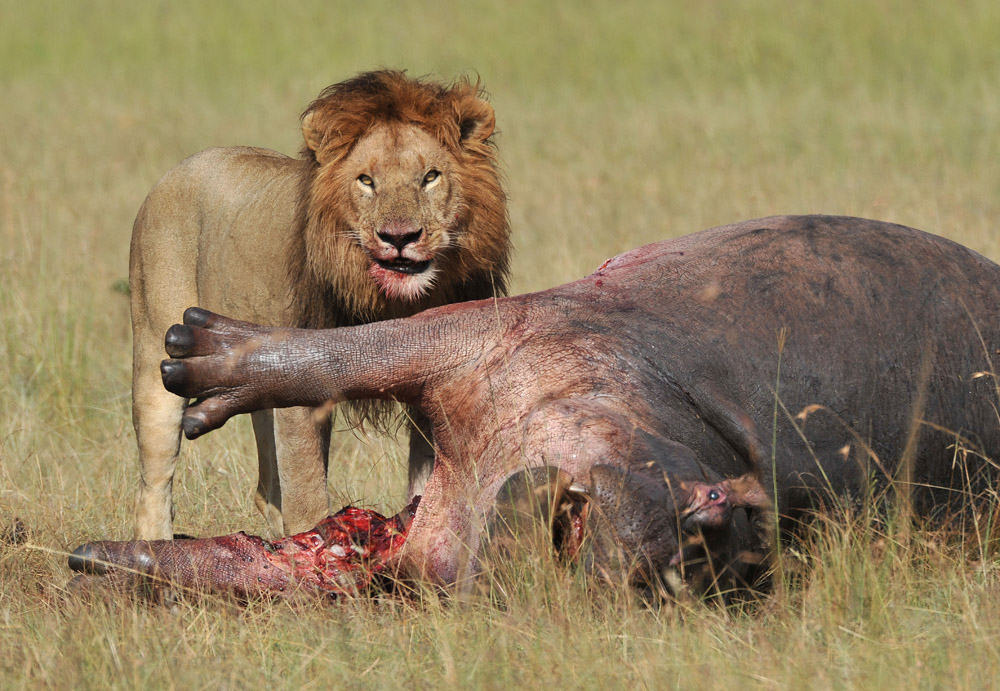
Lion eating hippo. We came upon this in mid-morning. A gang of four lion brothers had taken down the hippo during the evening and were taking turns eating. Three rested while this one ate and held off scavengers.
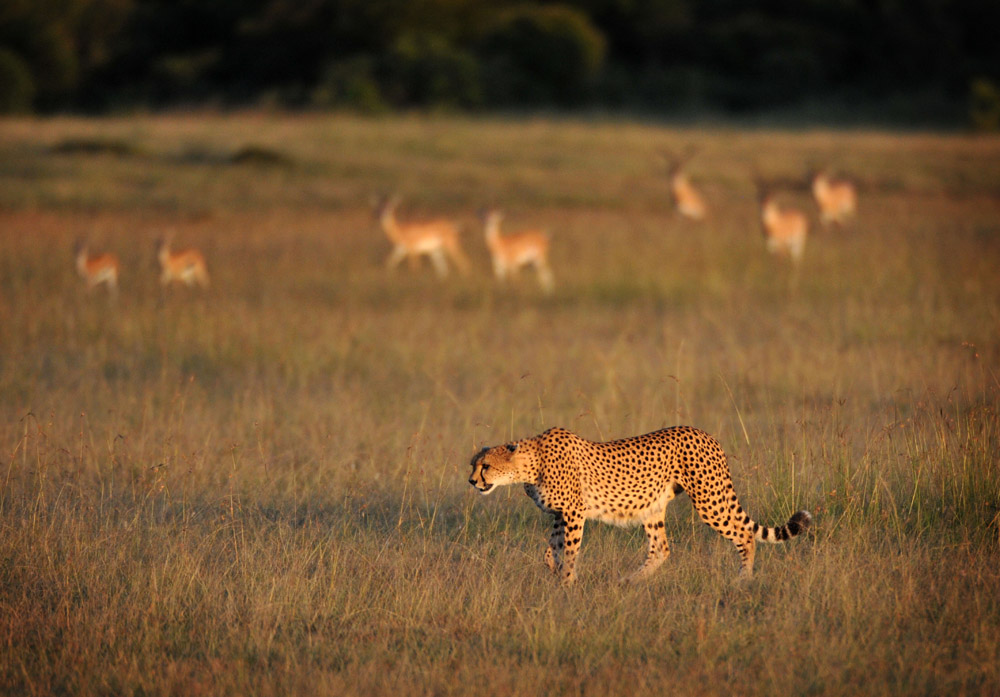
Cheetah on the hunt. This is one of my favorite shots, as it shows a cat in active mode. Most of our big cat photos were of resting or sleeping subjects. Here the cat is stalking a herd of antelope as the sun goes down.
Typical Photo Day
A typical day began with a 5:45 AM ‘wakeup’ knock on the tent door. We met as a group and drove off by 6:30 so as to get us in position to photograph the sunrise with a suitable acacia tree in the foreground. Once the sun was up, we began the ‘game drive’, patrolling for animals in the early golden light. We took a short breakfast break around 9:00 to eat packed meals and then continued photographing. The drivers were very knowledgeable as to where the wildlife was and usually got us several good photo ops on each drive. We returned to camp at noon for lunch and a siesta and then set out again at 2:30PM. The afternoon game drives were similar in manner to the mornings, only much warmer. All of the reserves required our drivers to be back at camp before sunset.
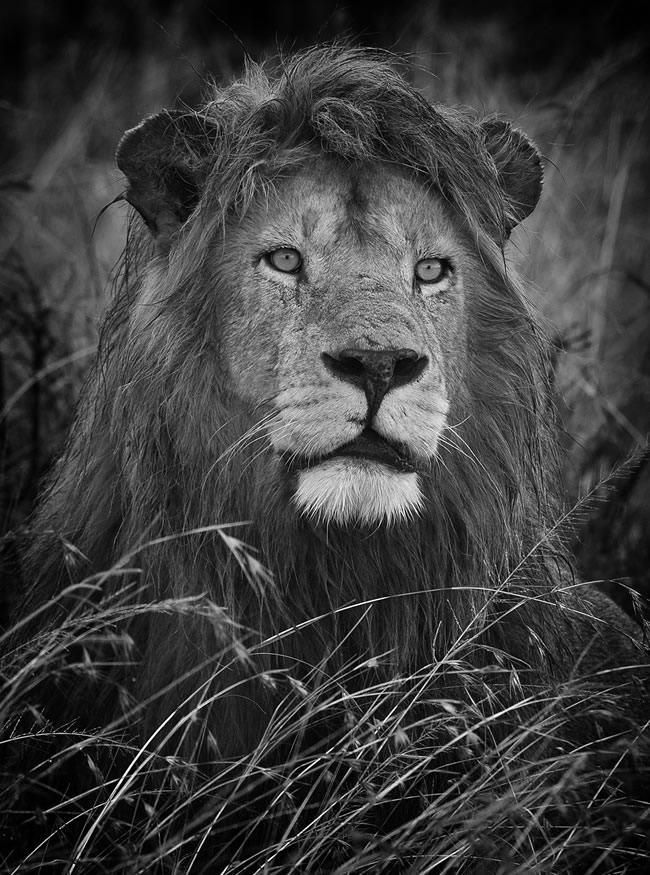
A large male lion in the grass on the Masai Mara.
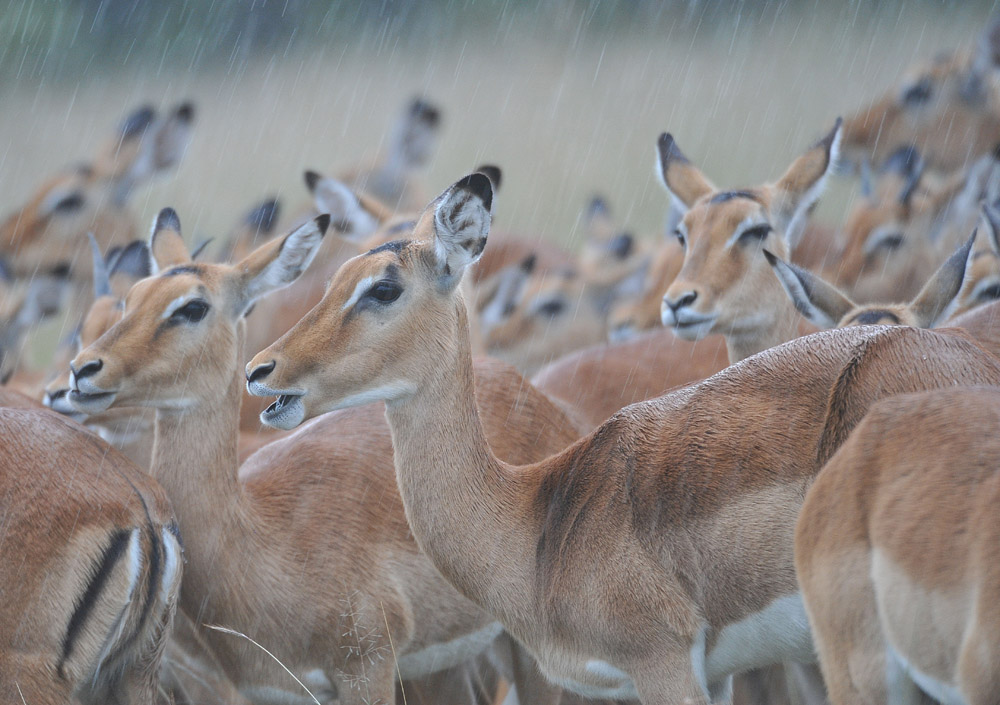
Thompson gazelles close ranks in driving rain on the Masai Mara.
Seasons / Weather
Kenya lies on the equator and shares common borders with Tanzania and Uganda. The country doesn’t have distinct seasons, the climate is generally very pleasant and variations in altitude and terrain create the contrasts. They do have ‘rainy’ seasons, which occur from late October through November (the ‘short rains’) and late March to early June (the ‘long rains’). As we were there in January, we were in between the short and long rains. The weather was hottest in Samburu as it is closest to the equator. There the afternoon temperatures were in the 90’s. Things cooled off a lot when we moved to Lake Nakuru and then Masai Mara
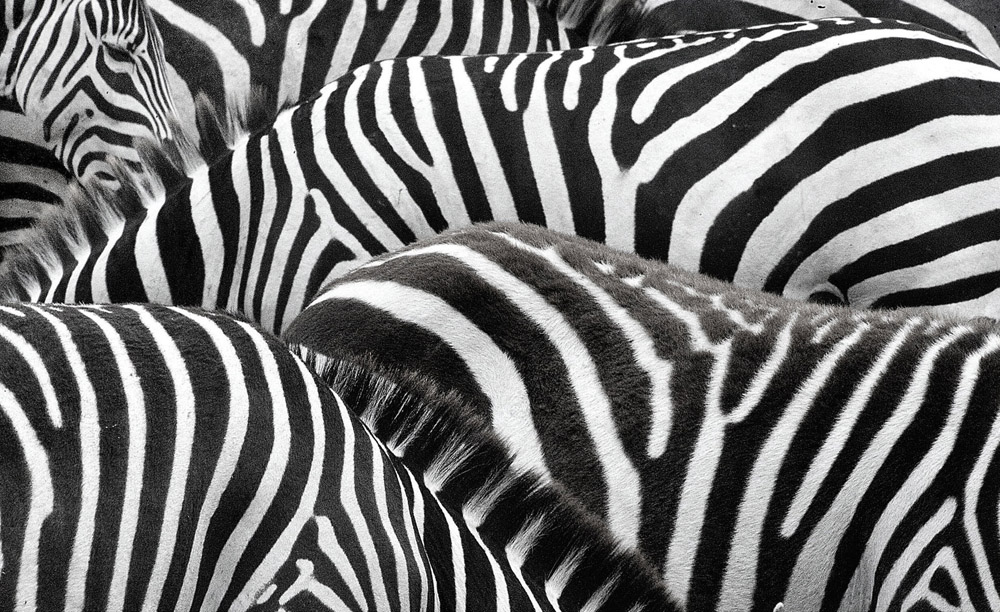
Zebra Stripes. We encountered several herds of zebras. I quickly got bored with shots of single and paired animals and started playing with the patterns. I used a 400mm with 1.4X converter for this shot. I was trying to completely fill the frame with compressed stripes. It took quite a while, as there always seemed to be a hole in the image where grass or sky was showing.
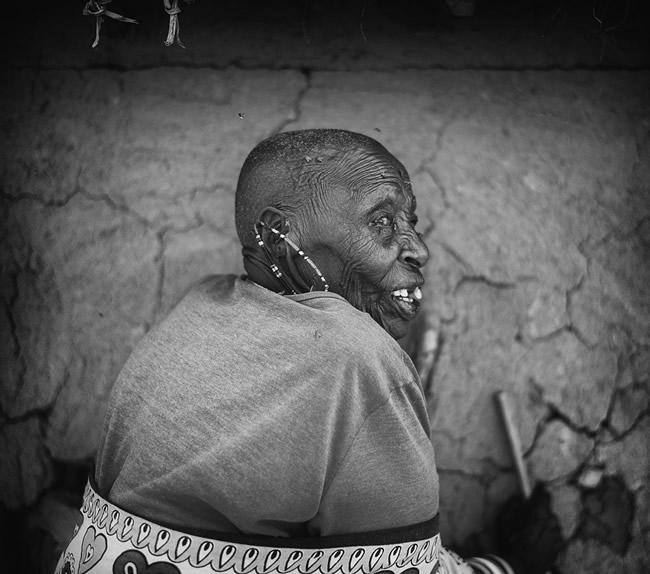
Massai elder, 89, bares a smile revealing the traditional custom of intentional tooth removal in her tribe while seeking shade by her mud, straw, and manure hut.
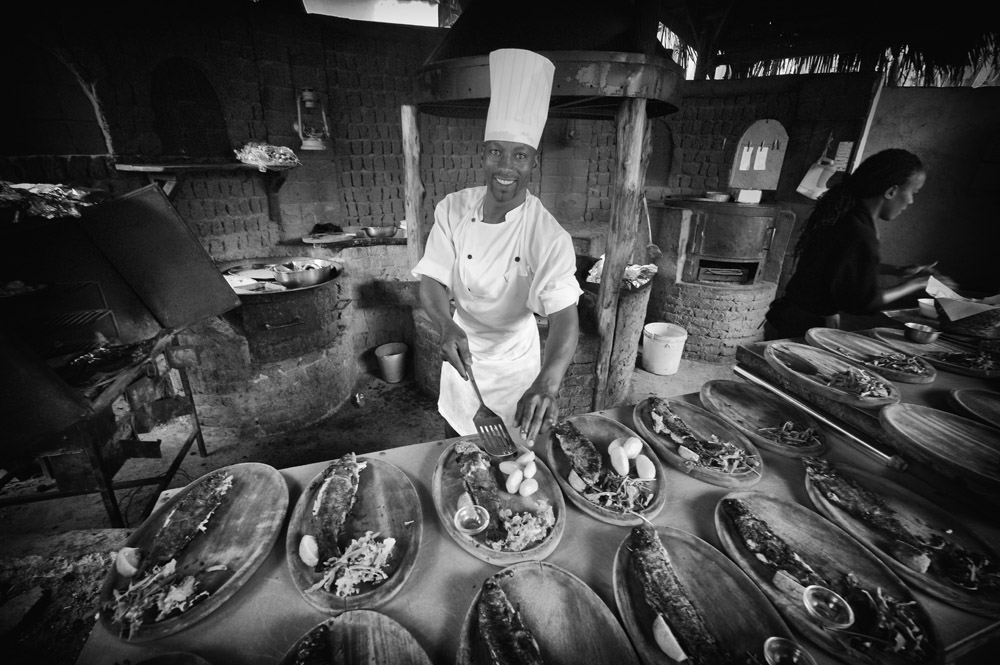
Trout farm cook fries up fresh faire for the treehouse restaurant guests.
Vehicles and Photography
All photography was done from Land Rover type vehicles with roof hatches. We were fortunate in that each photographer in our group had his/her own bench seat and could shoot from the right or left side of the vehicle. Most of us used bean bags to support the long lenses which worked out great. Those with fancy clamps and swivel heads had problems. I used a Nikon D3 and 200-400mm zoom for 90% of my shots. Sometimes I threw on a teleconverter when I needed the reach, but that was not too often. I also carried two other bodies: a Nikon D7000 body with a 18-200mm zoom and polarizer, and a Leica M9 with 35mm f/1.4. I used these bodies when we were close to the animals or if I wanted a wide angle shot. The biggest challenge was keeping the gear clean and safe while bouncing around in a dusty environment. The best solution to that is to minimize gear and tie down a padded bag with a bungee cord.
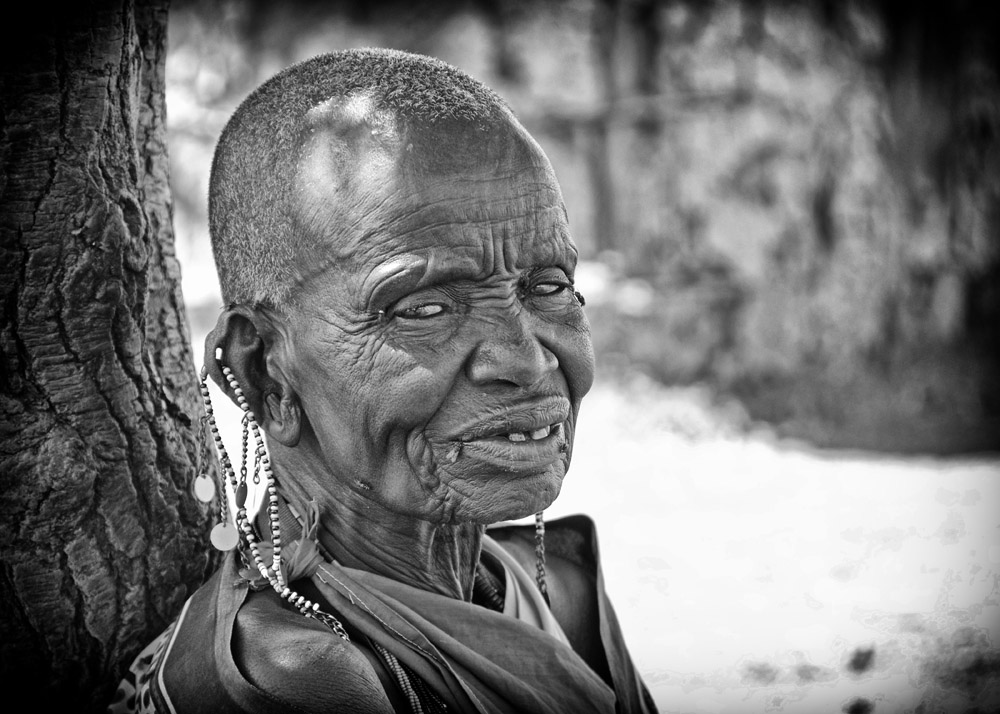
This Maasai elder is the oldest woman in the village. She was 89 years old when I photographed her.
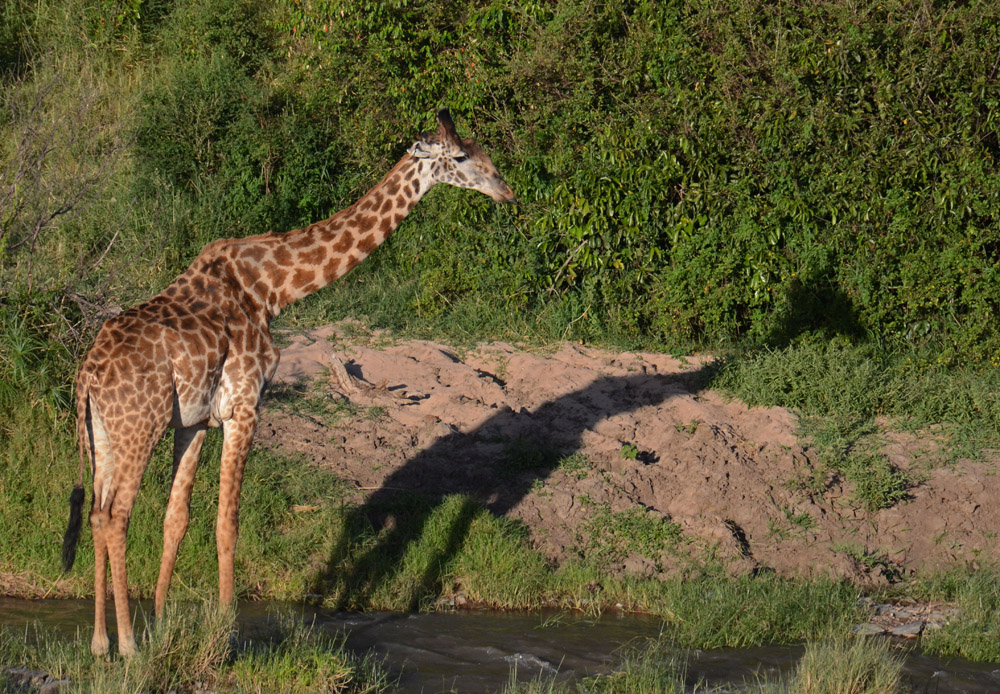
Giraffe and shadow along river in Masai Mara game preserve. Giraffes were one of the more common animals we encountered. They are not afraid of the vehicles whatsoever. The main difficulty is that most often we were shooting up at them with a sky or horizon background. Being a sucker for shadows, I love this shot.
I Like the Nightlife
Once back at camp after the afternoon game drive, my routine was to begin downloading the memory cards and then shower and take a swim. I usually could sneak in a 30 minute nap before pre-dinner beers. (Did I mention we were not roughing it?). Dinners at all of the camps were fantastic, usually offering fresh fish and beef prepared over a BBQ grill. Meal time is a social event and takes a couple of hours concluding with dessert and coffee. Once back in the tent, I made sure my images were safely on the computer and shut things down for the evening falling asleep to the sounds of baboons screeching, lions roaring, and bush babies shrieking.
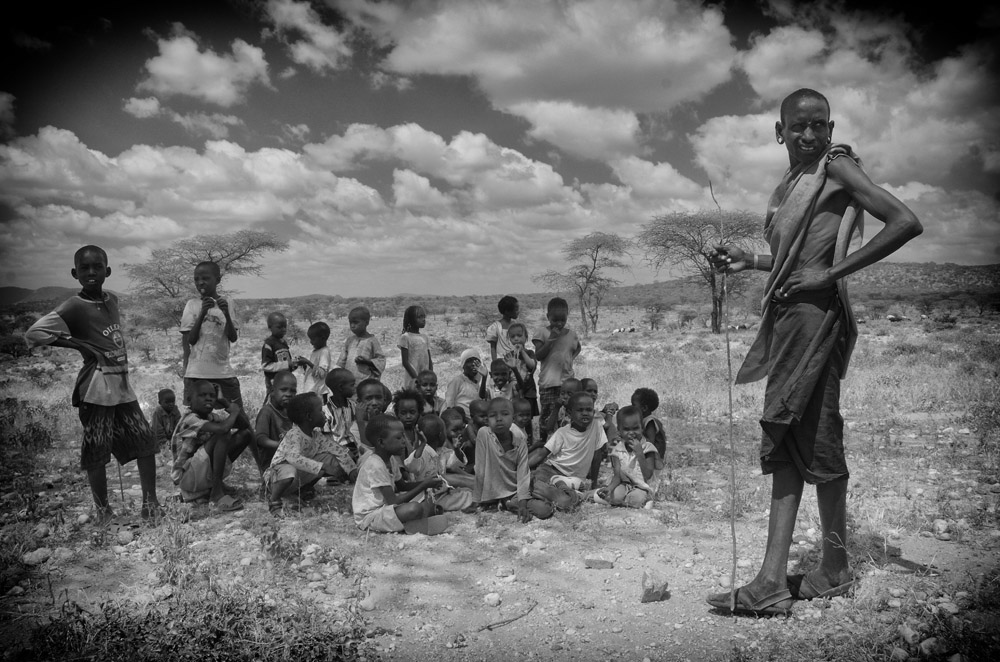
School teacher and children at Samburu village. Our group visited this village and I snuck off to photograph their open air classroom.
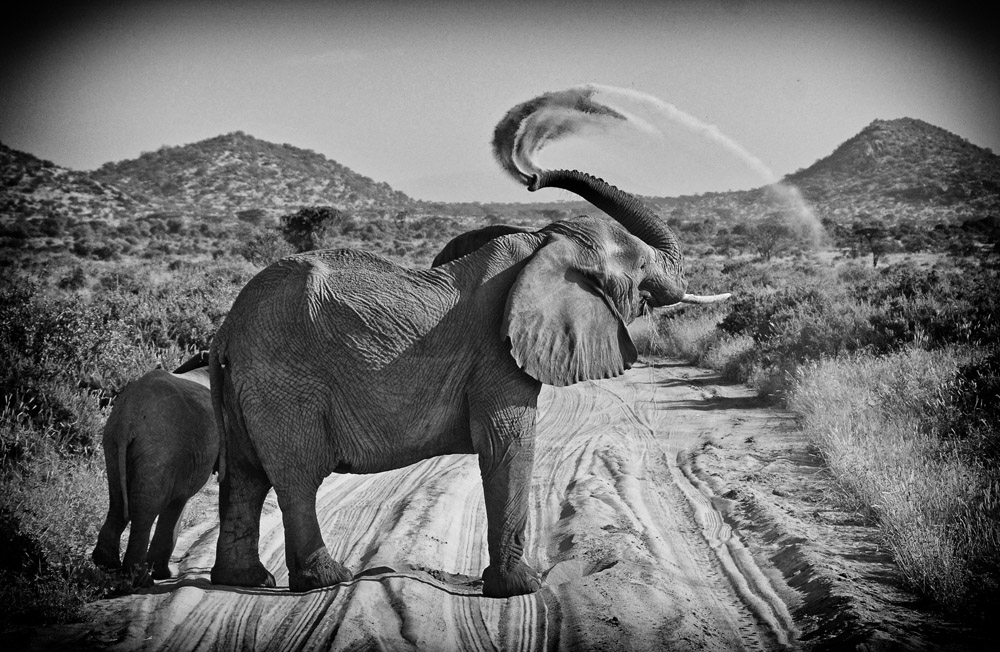
Elephant taking sand bath in Samburu Preserve. The sand leaves a dusty coating on the skin to protect the elephant from sun and insects.
Return from the Wild
We returned to Nairobi from Masai Mara via a small Cessna bush plane. Our last night in Kenya was spent at the Panari Hotel, a very modern and new facility very close to the airport. The hotel’s architecture is striking and it is part of a complex containing a shopping mall, skating rink, cinema and several international restaurants (Think of City Center meets Mall of America). After a final meal at the hotel, we boarded the flight to London.
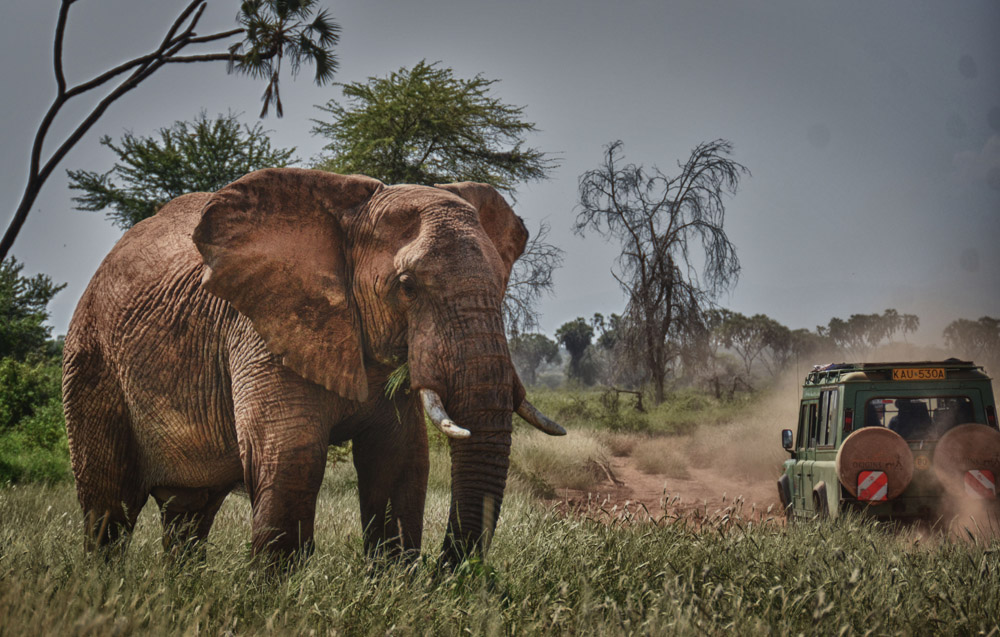
Bull Elephant in Samburu Park Reserve. This was one of the first animal sightings we had on the safari. You get a sense of scale here by comparing the (rather large) land cruiser vehicle to the elephant. He wasn't too happy when we obstructed his path, and approached vehicles until the drivers decided to evacuate the area.
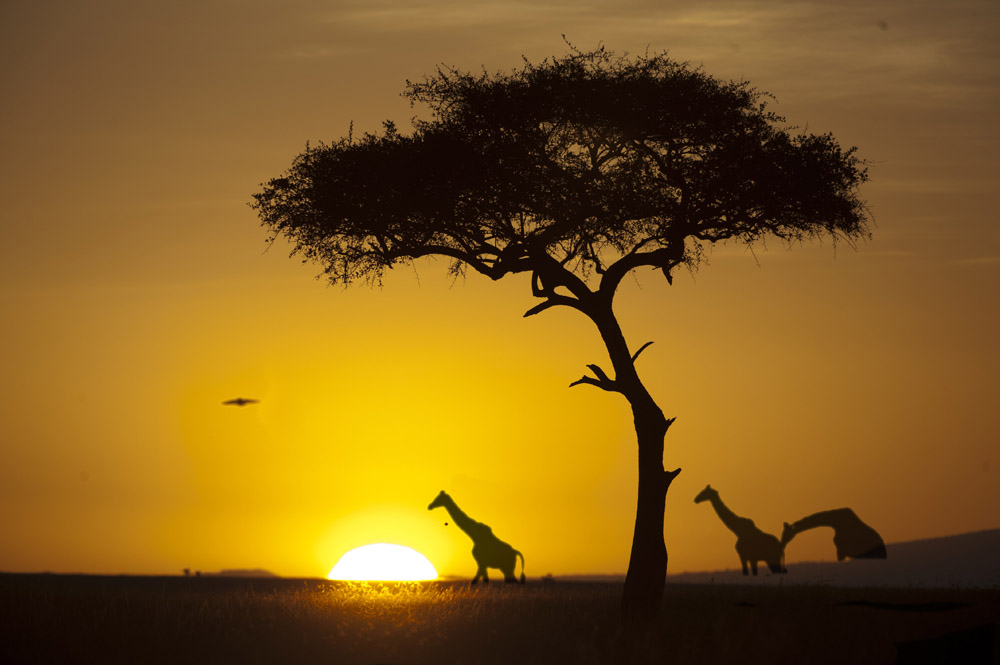
Giraffes at sunrise. We started each day out in the field positioned such that we had an interesting Acacia tree in the foreground.
To Be Continued
My adventure did not stop in London. From there, I hopped over to Paris on the Eurostar via the Chunnel and spent 4 wonderful days touring the museums and enjoying the fine restaurants. But that’s another story and another gallery. More to come later ..
 Dome, Goes Away
 2014 Legislator–so it begins
 Colder than Mars
 Gay Marraige Bill
  Capitol Repairs $260 million worth
 14 days in Kenya
 Battle at the Capitol
 Night Lights
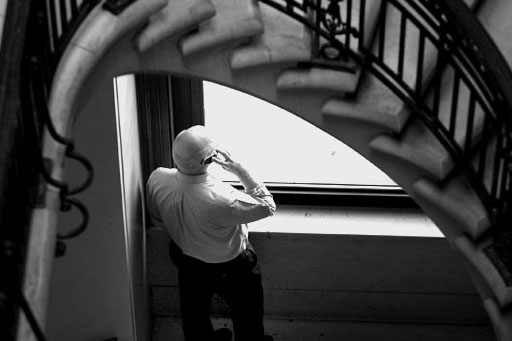 Capitol in Black & White
 Clash of the Skaters
 Herons Return to North Minneapolis
 Ricky – First Season
 Sled Dogs to St. Paul
 Where I Live
 What I Found in Cuba
 Fear and Loathing in Wobegon
 He came, he went
 NASCAR on Ice
 Barcelona in Black and White
 200 Feet up
 Tanks, May I Have Another
 A Very Odd Performance